
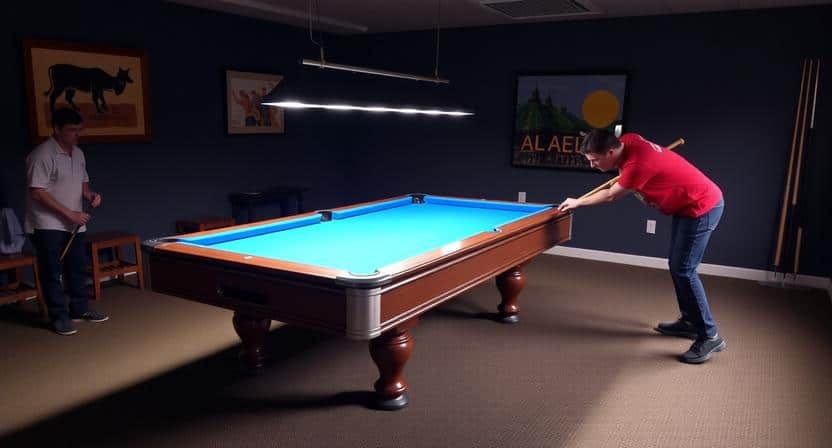
Learning how to play pool can be an enjoyable way to develop concentration, coordination, and strategic thinking. Whether you want to play casually with friends or improve your skills for competitive games, understanding the basics will give you a strong foundation.
Understanding the Pool Table
A standard pool table has six pockets, a playing surface, cushions around the edges, and a set of balls. Most beginner games use a cue ball along with numbered object balls. Popular versions of pool include eight-ball and nine-ball, each with slightly different rules and objectives.
Before learning advanced techniques, become familiar with the table, pockets, balls, and cue. A comfortable stance and proper cue control are essential for consistent shots.
Choosing and Holding the Cue
The cue is used to strike the cue ball. Hold the thicker end comfortably with your dominant hand while keeping your grip relaxed. Avoid squeezing the cue too tightly because a relaxed grip allows smoother movement.
Your other hand should form a stable bridge on the table. Place your hand firmly on the playing surface and create a small channel for the cue to slide through. This helps keep the cue straight during the shot.
Developing the Right Stance
A good stance provides balance and stability. Place your feet comfortably apart and position your body so that your head is directly over the cue. Bend slightly at the waist while keeping your eyes focused along the intended line of the shot.
Try to remain still while taking the shot. Unnecessary body movement can affect accuracy.
Aiming and Shooting
When learning how to play pool, start with simple straight shots. Choose an object ball and identify the pocket where you want it to go. Imagine a line connecting the object ball to the pocket, then determine where the cue ball needs to contact the object ball.
Practice moving the cue backward and forward smoothly before making contact. This controlled movement is often called the stroke. Avoid rushing the final motion.
Understanding Basic Strategy
Pool is not only about hitting balls into pockets. Positioning the cue ball for your next shot is equally important. After making a successful shot, think about where the cue ball will stop.
For example, instead of choosing the easiest pocket immediately, consider whether the resulting cue-ball position will give you another straightforward shot. Over time, this approach will improve your ability to plan several shots ahead.
Practicing Regularly
Consistent practice is one of the best ways to improve. Begin with straight shots, then practice cuts, longer shots, and shots involving different angles. You can also practice controlling the speed of the cue ball by using softer and stronger strokes.
As your confidence grows, learn techniques such as follow, draw, and side spin. These skills can provide greater control but should be introduced after you become comfortable with basic aiming and cue movement.
Conclusion
Learning how to play pool starts with mastering the fundamentals: understanding the table, holding the cue correctly, maintaining a balanced stance, aiming carefully, and developing a smooth stroke. Regular practice and patience will gradually improve your accuracy and confidence. Most importantly, enjoy the process and treat every game as an opportunity to learn something new.